27 August, 2026
How AI Will Force Us to ‘Rethink’ Education
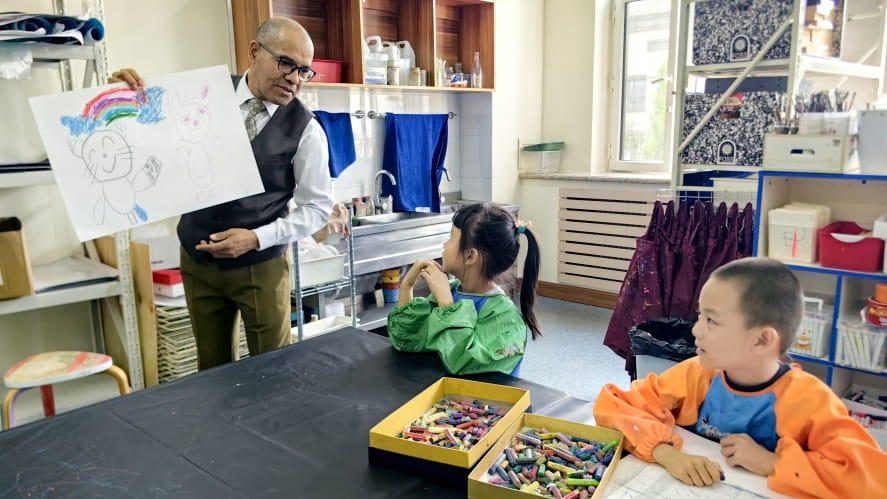

Howard Gardner, the author of Multiple Intelligences, was one of the first researchers whose work captured my attention and made me reflect on the purpose of education. Through his work, I learned that we have the potential to develop multiple intelligences, but that we may be stronger in some areas and weaker in others as we perform in different situations where cognition is required.
I came to understand that I have strong spatial intelligence and lower logical-mathematical intelligence. More importantly, I learned that these intelligences are not fixed; they can be developed and strengthened. Therefore, I believe that helping students develop their different capacities is an important part of the task of education.
Education Week recently published an article titled, “Howard Gardner: How AI Will Force Us to ‘Rethink’ Education.” Gardner discusses the concept of the “synthesizing mind” and how humans absorb and organize information. He also addresses human and computational cognition, clearly recognizing that AI can outperform us when it comes to processing enormous amounts of data in a very short time. AI systems have demonstrated remarkable cognitive capabilities. As other authors have also suggested, AI is learning and making new forms of knowledge development possible.
However, there is a potential threat: AI may eventually handle skills that were initially considered uniquely human—the disciplined mind, the synthesizing mind, and other forms of cognitive work—so effectively that developing these abilities could become optional for our species.
Gardner also reminds us that, despite the rise of AI, there are two other important mindsets: the respectful mind and the ethical mind. These are the qualities we need to strengthen in order to keep teaching and learning fundamentally human.
As Howard Gardner writes: “We will use our own minds because it brings pleasure to us and to others. Perhaps we’ll even discover or create new knowledge, entities, or experiences beyond AI’s reach—maybe even poetry or stories no AI could write. But that will only happen if individuals are intrinsically motivated to stretch their abilities.”
This makes me wonder: if AI can increasingly perform many cognitive tasks for us, perhaps the purpose of education will become less about what we can process and more about why we think, what and why we create, how we relate to others, and what kind of human beings we choose to become.
Written by Mr. Martin Moratillo
Head of Art and Design Department at DAIS
Related news
News image ![Saturday school]() News | Whole school
News | Whole school
 News | Whole school
 DAIS Saturday School 2026: Registration Is Open
From early learning and English development to exam preparation, robotics, science and business, Saturday School offers focused learning beyond the regular school week.
News image ![Sea Dragon is back to school]() News | Whole school
News | Whole school
 News | Whole school
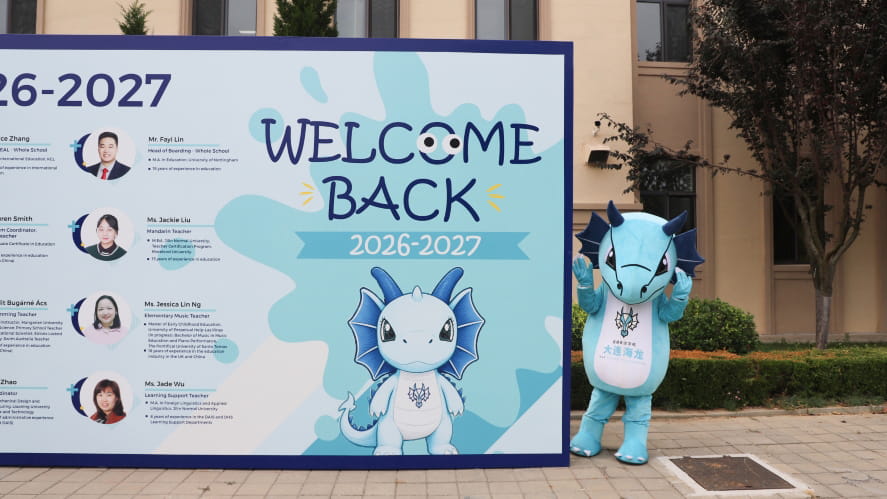
 Welcome Back, Sea Dragons! A New School Year Begins at DAIS
Dalian American International School is excited to welcome new and returning families to our beautiful campus.